Meniscal Surgery
Patient information — Dr Christopher Spelman, Orthopaedic Surgeon
Overview
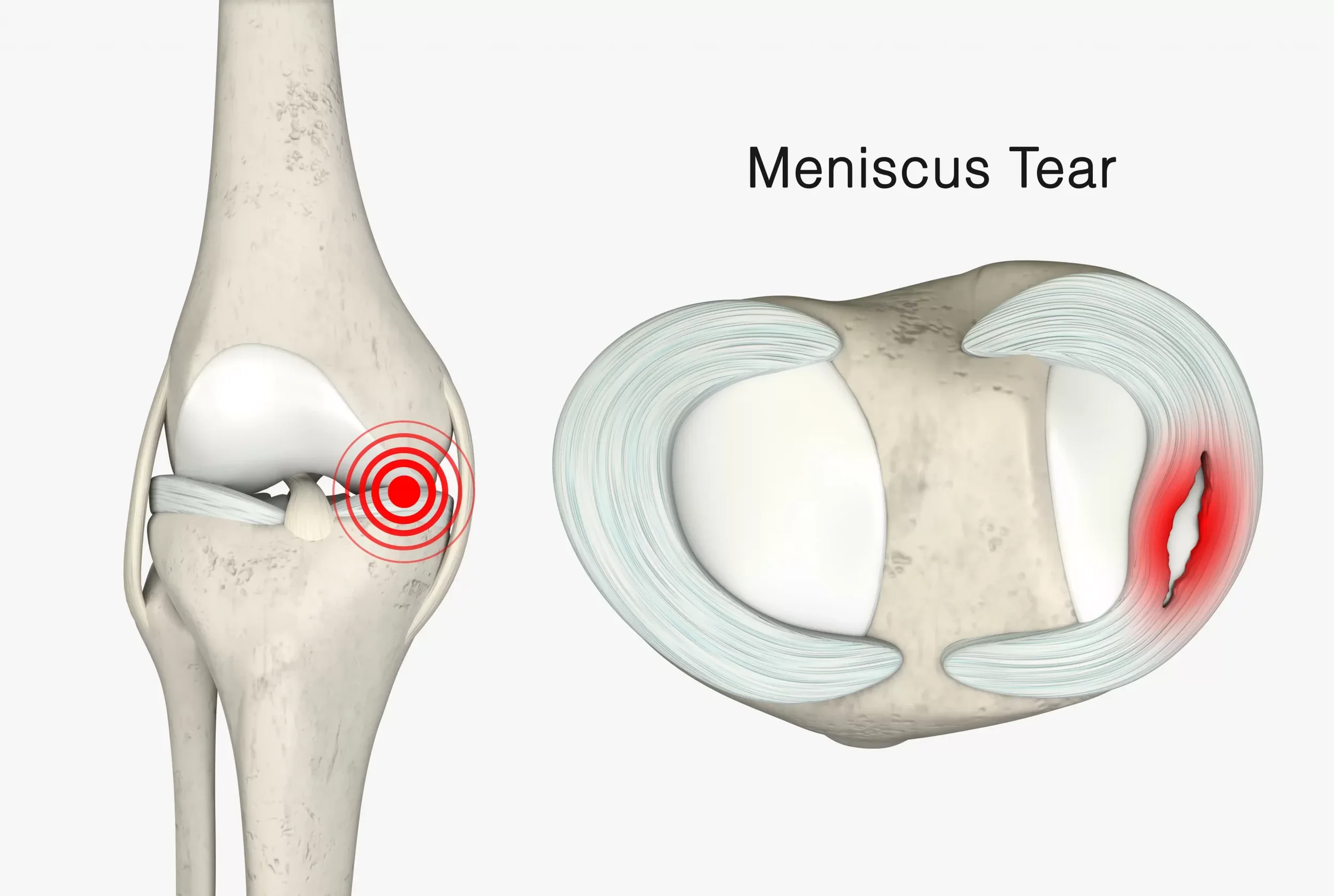
Each knee contains two menisci – C-shaped wedges of cartilage that sit between the thigh bone and shin bone. They act as shock absorbers, help distribute load across the joint and contribute to stability. Meniscal tears are among the most common knee injuries and can occur suddenly during sport (a twisting injury in a younger patient) or gradually as part of age-related degeneration.
Modern meniscal surgery is guided by a single principle: wherever possible, preserve the meniscus. Removing meniscal tissue increases the long-term risk of arthritis, so Dr Spelman aims to repair rather than remove the meniscus whenever the tear is suitable.
Types of tear and how they are treated
The right treatment depends on the type of tear, its location and blood supply, your age and your symptoms.
Repairable traumatic tears
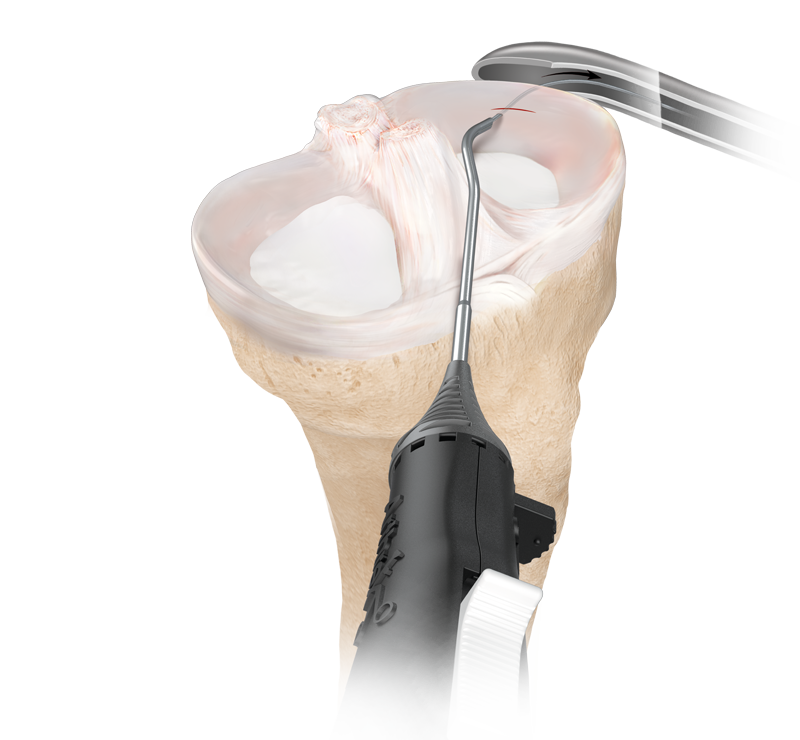
Tears in the outer part of the meniscus, which has a blood supply, can often be repaired (stitched). This is preferred in younger patients and when the tear is caught early, as it preserves the shock-absorbing function of the meniscus. Repair is frequently performed at the same time as ACL reconstruction, which improves healing rates.
Degenerative tears
Degenerative tears develop gradually in middle-aged and older patients and often improve with non-surgical treatment. High-quality evidence shows that for these tears, supervised exercise and physiotherapy achieve outcomes comparable to arthroscopic surgery, so a trial of non-operative treatment is generally recommended first.
Partial meniscectomy
Where a tear is not repairable – for example, a complex or degenerate tear in an area with poor blood supply – the damaged portion is trimmed and the healthy meniscus preserved (partial meniscectomy). This reliably relieves mechanical symptoms such as catching and locking.
The operation and recovery
Meniscal surgery is performed arthroscopically (keyhole) as day surgery. After a partial meniscectomy, recovery is usually quick, with return to normal activity over a few weeks. A meniscal repair requires a more protected rehabilitation – often with a period of restricted weight-bearing and limited deep bending for around six weeks – because the repaired tissue needs time to heal, but it offers better long-term protection of the joint.
Outcomes and what the evidence shows
A landmark randomised, sham-controlled trial found that in patients with a degenerative meniscal tear and no arthritis, arthroscopic partial meniscectomy was no better than a placebo (sham) procedure at twelve months. A separate randomised trial found no clinically relevant difference between exercise therapy and arthroscopic surgery at two years for degenerative tears.
For repairable tears, meniscal repair is worthwhile despite a higher re-operation rate than simply trimming the meniscus. Systematic reviews report a success rate of around 80% for meniscal repair, with roughly 20% eventually requiring further surgery, but with better long-term joint outcomes than meniscectomy. Importantly, the long-term risk of developing symptomatic knee arthritis is lower after repair (around 10%) than after partial meniscectomy (around 17%), compared with about 2% in the general population – which is why preserving the meniscus is prioritised.
Complications
Arthroscopic meniscal surgery is common and generally very safe, with an overall complication rate of only a few per cent. Risks that are specifically discussed include:
● Failure of a repair to heal – around one in five repairs does not fully heal and may need further surgery, sometimes a subsequent trimming of the tissue. Failures often occur after the second year, and medial (inner) meniscus repairs fail more often than lateral.
● Progression to osteoarthritis – any loss of meniscal tissue increases the long-term risk of arthritis; this risk is higher after meniscectomy than after successful repair.
● Persistent or recurrent symptoms – some knees continue to have pain, particularly where there is underlying cartilage wear.
● Stiffness – temporary loss of movement, more common after repair because of the protected rehabilitation; occasionally requires additional physiotherapy or, rarely, a further procedure.
● Infection – a joint infection is uncommon after knee arthroscopy (well under 1%) but is serious and may require antibiotics and further surgery.
● Blood clots – deep vein thrombosis, and rarely pulmonary embolism, are uncommon after keyhole knee surgery.
● Nerve or vessel irritation – small areas of numbness around the incisions can occur; injury to the nerves or vessels around the knee (particularly with repair stitches placed on the outer side) is rare.
Summary
Not every meniscal tear needs surgery. Degenerative tears usually respond to physiotherapy, while repairable traumatic tears are best preserved with a repair to protect the knee for the long term. Dr Spelman will discuss which approach is right for your particular tear.
Meniscal repair surgery